Great outdoor lighting rarely comes from adding more fixtures. It comes from choosing the right landscape lighting techniques for each part of the property and layering them so the eye moves naturally from the street to the front door to the backyard. Professional designers draw on the same core toolkit, then adapt it to the architecture, plants and views in front of them.
Below are the twelve landscape lighting techniques we use most, what each one does and where it tends to work on Texas homes, from Houston brick colonials to Hill Country limestone ranches.
How to use these landscape lighting techniques
Think in layers. A focal layer draws the eye (a lit facade, a specimen oak). An ambient layer fills in softly so the yard does not look like a few bright islands in a sea of black. A task layer handles safety on paths, steps and driveways. Each technique below fits one or more of those layers.
Start with the two or three views that matter most, usually the street view, the view from your main living area and the patio. Then pick techniques for each.
The 12 techniques
Uplighting
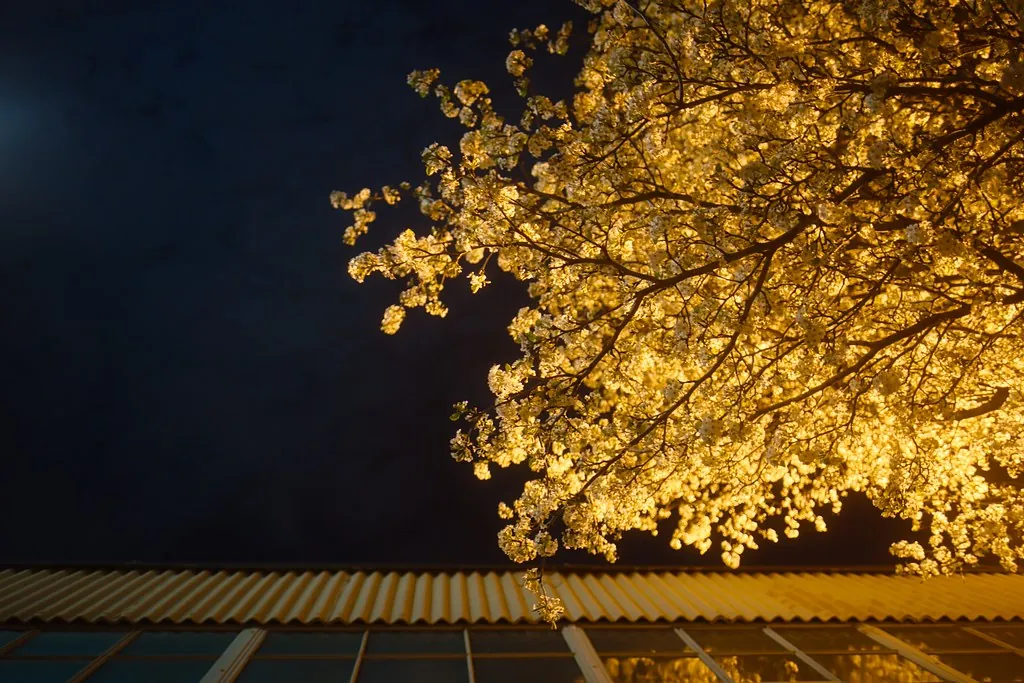
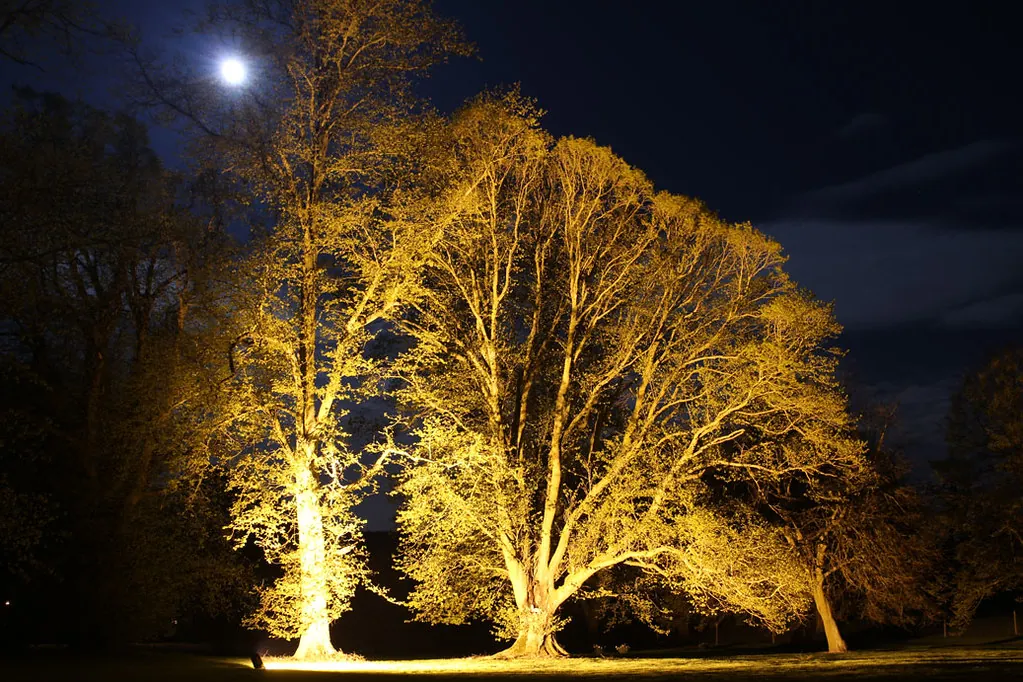
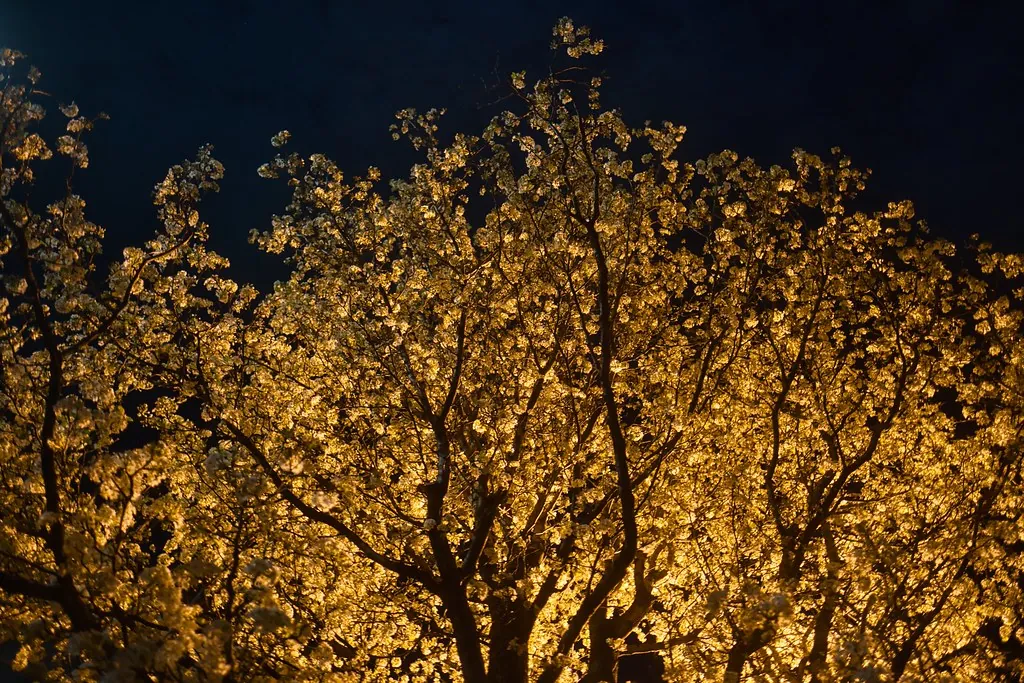
A spotlight or well light at ground level aimed up into a tree, column or wall. It creates instant drama and is the backbone of most designs. In Texas, it is the go-to for live oaks, pecans, palms and two-story facades.
Downlighting
Fixtures mounted high on eaves, pergolas or trees aimed down to create pools of light. It feels natural, like sunlight or moonlight. Ideal over outdoor kitchens, patios and seating areas under covered porches.
Moonlighting
Downlights placed high in a large tree so light filters through branches and casts dappled shadows on the ground. Mature live oaks in Houston, Austin and San Antonio are perfect candidates.
Grazing
A light placed within inches of a textured surface and aimed nearly parallel to it. Every edge throws a shadow. Stunning on Austin stone, chopped limestone, fieldstone chimneys and stacked-stone walls.
Washing
Wide-beam fixtures set back from a wall to light it evenly and softly. Best on smooth stucco, painted brick and siding where you want brightness without harsh texture. Common on Mediterranean and modern homes.
Silhouetting
Light the wall or fence behind a plant, not the plant itself, so its shape reads as a dark outline. Agave, yucca, sotol, Mexican fan palms and sculptural crape myrtles look striking this way.
Shadowing
A fixture in front of a plant throws its shadow onto a wall behind it, often larger than life. Works well with lacy foliage such as Japanese maple, bamboo or a small multi-trunk crape myrtle against a light stucco wall.
Spotlighting and accent
A narrow beam picks out a single object: a sculpture, a house number, a specimen agave, a fountain. Keep it subtle so the accent feels discovered, not floodlit.
Path lighting
Low area lights cast pools of light along walkways and beds. The goal is safe footing with no glare. Staggered placement looks far more natural than straight rows down each side.
Cross lighting
Two or more fixtures aimed at the same subject from different angles. It gives trees and statues a three-dimensional look instead of a flat, one-sided glow. Essential for large canopy trees seen from several directions.
Mirroring
Lighting a feature on the far side of still water so its reflection appears on the surface. Pools, ponds and retention lakes common in The Woodlands, Katy and Sugar Land subdivisions make this possible.
Step and hardscape
Small fixtures built into risers, walls, seat walls or under cap stones. They light steps for safety and outline outdoor living areas. Great for pool decks, sloped Hill Country lots and terraced backyards.
Choosing techniques by part of the property
Here is how these landscape lighting techniques typically map onto a Texas home. Use it as a starting checklist, not a rulebook.
| Area | Primary techniques | Supporting techniques | Texas example |
|---|---|---|---|
| Front facade | Uplighting, washing | Grazing on stone, accent on entry | Two-story brick home in Plano or Frisco |
| Large trees | Uplighting, cross lighting | Moonlighting | Mature live oak in a San Antonio front yard |
| Ornamental plants | Silhouetting, shadowing | Accent | Agave and yucca beds in Austin xeriscape |
| Walks and drive | Path lighting | Moonlighting from trees above | Curving walk to the front door in Katy |
| Patio and pool | Downlighting, step and hardscape | Mirroring, accent | Pool and outdoor kitchen in The Woodlands |
| Stone walls and chimneys | Grazing | Washing for balance | Limestone ranch home in New Braunfels |
Getting each technique right
Control the beam
Beam angle is half the battle. Narrow spots (around 10 to 25 degrees) suit tall, slim subjects like palms and columns. Medium beams (around 35 to 45 degrees) suit most trees and facade sections. Wide floods (60 degrees and up) are for washing. The wrong beam turns a sharp accent into a blob or leaves a tall tree lit only halfway up.
Hide the source
The best lighting shows the effect, not the fixture. Tuck uplights behind shrubs or in beds, use shrouds and glare guards, and aim so neither you nor the neighbors look straight into a lamp.
Match color across techniques
Keep color temperature consistent within a scene. Most Texas homes look best around 2700K, with occasional 3000K for foliage. If you want help choosing, read warm white vs cool white landscape lighting.
Balance brightness
Contrast creates drama, but too much contrast feels harsh. If a facade is very bright, the yard around it looks darker by comparison. Dimmable fixtures or adjustable lamps let a designer fine-tune the balance at the final after-dark adjustment.
Tip: Preview combinations before you commit. Our lighting visualizer lets you try uplighting, path lights and accents on a sample home, and a night demo shows the real effect on yours.
A layered example: a typical Texas front yard
Picture a two-story brick home with a stone entry, a mature live oak off to one side, a curving front walk and a bed of ornamental grasses and agave. Here is how a designer might layer landscape lighting techniques on that one view.
Anchor the house
Uplight the brick between windows with medium beams and wash the wider wall sections so the facade reads evenly from the street. Graze the stone entry columns to show their texture.
Feature the tree
Cross-light the live oak trunk and lower canopy with two or three uplights from different sides, then add one or two downlights high in the branches to moonlight the lawn and walk below.
Light the walk
Stagger a few path lights along the curve, leaning on the moonlight from the oak so fewer path fixtures are needed and the walk does not look like a runway.
Add the accents
Silhouette the agave against the lit brick behind it and use a narrow spot on the house numbers so guests and delivery drivers can find you.
Balance at night
Dim or swap lamps so the tree, facade and walk feel related rather than competing. That final after-dark adjustment is where a design comes together.
That one view uses six techniques, yet none of them feel busy because each has a clear job. The backyard would get its own set, usually downlighting over the patio, step lights on the pool deck and mirroring across the water.
Common mistakes to avoid
- Lining both sides of a walk with evenly spaced path lights, which creates the runway look. See our path light spacing guide.
- Uplighting a big tree from one side only, leaving it flat and half dark.
- Washing a stone wall when grazing would show off its texture.
- Mixing cool white and warm white fixtures in the same view.
- Lighting everything equally so nothing stands out.
- Aiming fixtures into windows or across the street.
Bringing the techniques together
The strongest designs use a handful of techniques with intention: uplight and cross-light the signature tree, graze the stone, wash the smooth walls, moonlight the walk and keep the patio soft with downlights. For tree-specific details, see the tree uplighting guide, and explore our architectural lighting and tree and garden lighting services.
If you would like to see which techniques suit your home, we will bring fixtures out after dark and show you in person.