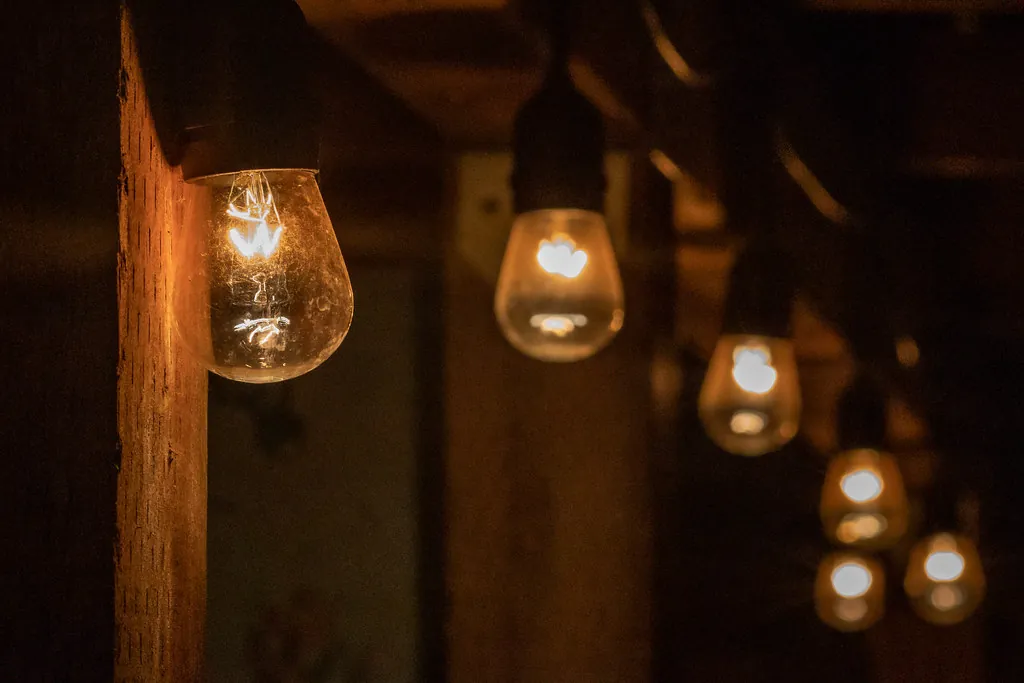
Choosing between warm white vs cool white landscape lighting is one of the decisions that most changes how your home looks at night, yet it is often left to whatever lamp came in the box. The same limestone facade can glow honey gold or look flat and gray depending on a few hundred degrees Kelvin. This guide explains the scale, matches common Texas materials and plants to the right color, and shows how to mix temperatures without the yard looking patchy.
How the Kelvin scale works
Color temperature is measured in Kelvin (K). Lower numbers are warmer and more amber, like candlelight or an old halogen lamp. Higher numbers are cooler and bluer, like midday sky. For landscape lighting, the useful range runs from about 2200K to 5000K.
| Color temperature | How it looks | Where it works best |
|---|---|---|
| 2200K | Deep amber, like a gas lantern | Historic homes, lanterns, intimate patios, wildlife-sensitive areas |
| 2400K to 2500K | Warm amber, softer than halogen | Red brick, cedar, rustic ranch homes, Hill Country stone |
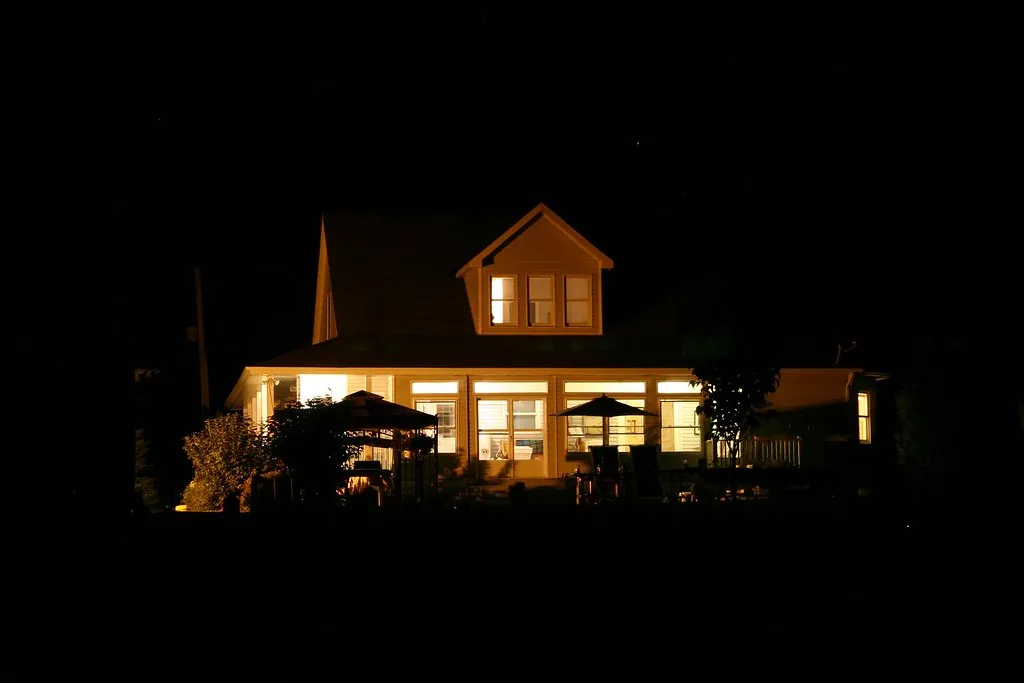
| 2700K | Classic warm white, similar to halogen | Most facades, brick, limestone, stucco, entries and paths |
| 3000K | Neutral warm white, slightly crisper | Green trees and shrubs, modern homes, lighter stucco |
| 3500K to 4000K | Neutral to cool white | Silver foliage, palms, water features, contemporary accents |
| 5000K | Cool, bluish daylight | Rarely residential; sometimes moonlight effects or commercial use |
Warm white vs cool white landscape lighting: the core difference
Warm white (roughly 2200K to 3000K) enhances reds, oranges, browns and creams. That covers most Texas building materials. It reads as inviting and residential, and it is closest to the halogen glow people remember.
Cool white (roughly 3500K to 5000K) enhances blues, silvers and some greens, and it reads crisp and modern. Used everywhere, it tends to feel like a parking lot. Used deliberately on the right subject, it can look striking.
The rule of thumb: match the light to the material, not the other way around. Warm materials want warm light.
Matching color temperature to Texas materials
2500K to 2700K
Warm light brings out the red and orange tones of brick common across Dallas, Fort Worth and Houston subdivisions. Cool white turns red brick muddy and slightly purple.
2700K
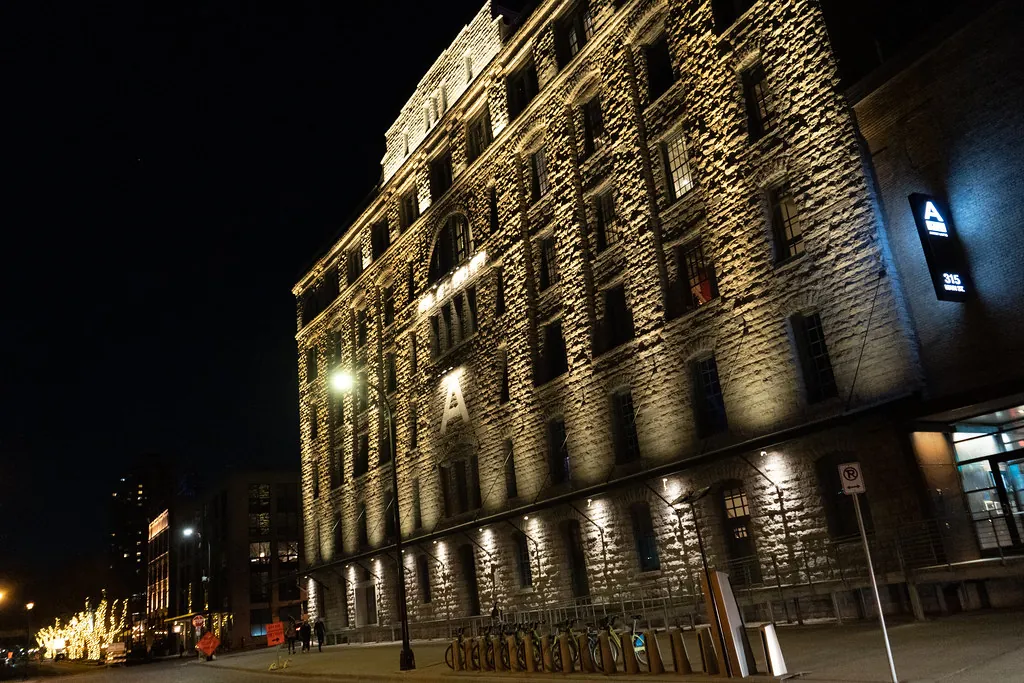
Cream and buff limestone glows golden at 2700K. Grazing it at this temperature shows every chiseled edge. Very white limestone on a modern home can handle 3000K.
2700K to 3000K
Warm-toned or earthy stucco on Mediterranean and Spanish-style homes suits 2700K. White or gray stucco on contemporary homes often looks cleaner at 3000K.
2400K to 2700K
Cedar siding, pergolas and fences come alive under warm light, which deepens the grain. Cool light makes wood look gray and weathered.
Matching color temperature to Texas plants
Plants are more forgiving than masonry, and slightly cooler light can help foliage look fresh.
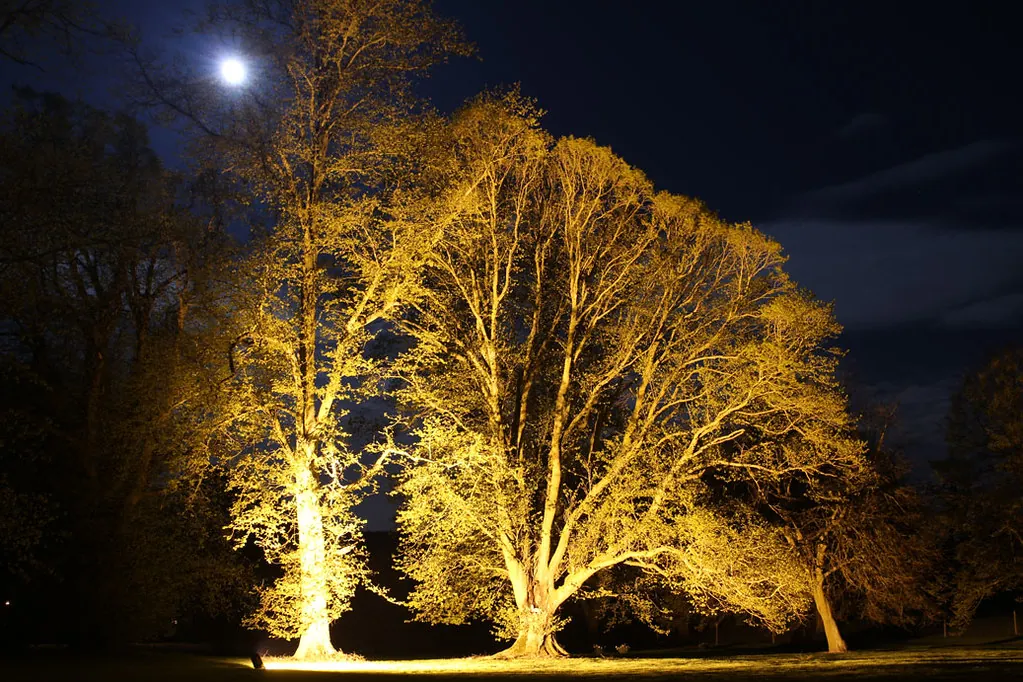
- Live oak, pecan and cedar elm: 2700K keeps trunks and bark warm, while 3000K makes the deep green canopy pop. Many designers use 3000K on canopies and 2700K on the house.
- Texas sage, silver ponyfoot and other silver foliage: 3000K to 4000K brings out the silver-gray leaves. Under very warm light, they can look dull or brown.
- Palms (sabal, Mexican fan, date): 3000K works well on trunks and fronds. Coastal properties sometimes use 4000K on palms for a crisp resort look.
- Crape myrtle: the smooth, cinnamon-colored bark looks best at 2700K.
- Agave, yucca and succulents: blue-gray succulents can take 3000K to 3500K, especially when silhouetted against a warm wall.
For more on lighting trees specifically, see our tree uplighting guide and tree and garden lighting service.
Why CRI matters as much as Kelvin
Color rendering index (CRI) measures how accurately a light shows colors compared with natural light, on a scale up to 100. Two lamps can both be 2700K, yet one makes brick look rich while the other makes it look flat. That difference is usually CRI.
- CRI 80: acceptable, common in budget lamps.
- CRI 90 and above: richer reds, truer greens, better skin tones on the patio.
For homes with red brick, warm stone or colorful plantings, high-CRI lamps are worth it.
Mixing temperatures the right way
Mixing is fine when it is intentional. The trick is consistency within a single view.
- Keep the house in one temperature, usually 2700K.
- Use 3000K on trees and green beds if you want more contrast.
- Never mix temperatures on the same wall or the same tree.
- Keep paths and steps matched to the facade.
- Use the same lamp brand and series so "2700K" really matches.
Watch out: When old halogen fixtures are partly upgraded to LED, the yard can end up with three or four slightly different whites. A mismatched mix is one of the most common things we fix. Read about upgrading from halogen to LED to do it in one consistent pass.
Patios, pools and outdoor living
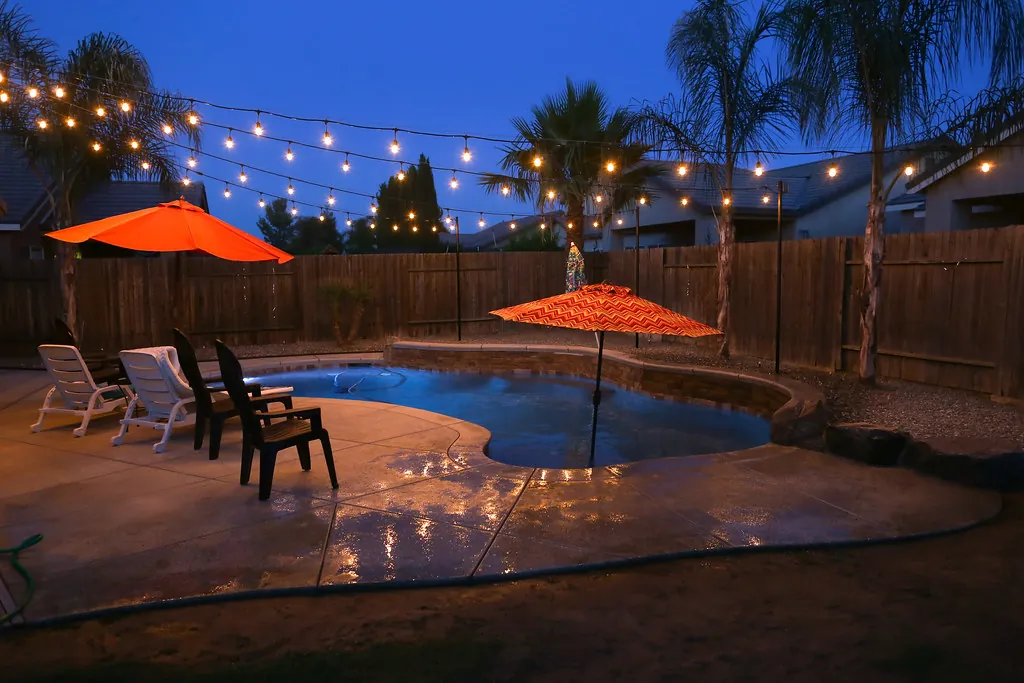
Where people gather, color temperature affects more than the architecture. Faces, food and drinks all look better under warm, high-CRI light, so downlights over outdoor kitchens, dining tables and seating areas are usually 2700K. Cooler light over a patio tends to feel like a commercial space and makes skin look pale.
Pools are the exception that proves the rule. Water reflects the sky and the pool finish, so blue and white tones already dominate. In-pool lighting is often cooler or color-changing, while the surrounding deck, steps and plantings stay warm so the space still feels residential. Our patio and pool lighting designs typically separate those zones on their own controls.
Insects, neighbors and the night sky
Warm light has a few practical benefits beyond looks. Many night-flying insects are drawn more strongly to bluer, cooler light, so a warm palette around the patio can mean fewer bugs swarming the fixtures on a humid Texas evening. Warm light also feels less intrusive to neighbors and is the color temperature that dark-sky guidelines generally favor. If your property backs onto a greenbelt, creek or ranch land, 2200K to 2700K with well-shielded fixtures is a considerate choice.
What about color-changing fixtures?
RGB and tunable-white fixtures let you shift color from an app. They are fun for holidays, game days and parties, and tunable white lets you fine-tune between warm and neutral without changing lamps. The tradeoff is cost and, with some products, lower color quality in plain white mode. A common middle ground is to keep the main facade and trees on high-quality fixed white lamps and add a few color-capable fixtures on a separate zone through smart lighting controls.
Remember that brightness and color interact too. A 3000K fixture at high output can look cooler than the same lamp dimmed. Final aiming and dimming during the after-dark adjustment visit often settles small color questions without swapping anything.
How to choose for your home
Start with your main material
Red brick, cedar and warm stone point to 2500K to 2700K. White stucco and modern exteriors point to 2700K to 3000K.
Look at your key plants
Heavy green canopy may want 3000K. Silver foliage and palms may want 3000K or a little cooler.
Decide on a mood
Warmer feels cozy and traditional. Slightly cooler feels crisp and contemporary.
Test at night
Color looks very different after dark. A night demo with sample lamps settles the debate in minutes.
You can explore options with our color temperature guide before you commit. If you live in the Hill Country, our Austin and New Braunfels pages talk more about lighting limestone homes.
The bottom line
In the warm white vs cool white landscape lighting debate, warm white wins for most Texas homes, with 2700K as the safe, flattering default and 3000K reserved for foliage and modern finishes. Cool white has a place, but as an accent, not the main event. The best way to decide is to see both on your own house after dark.