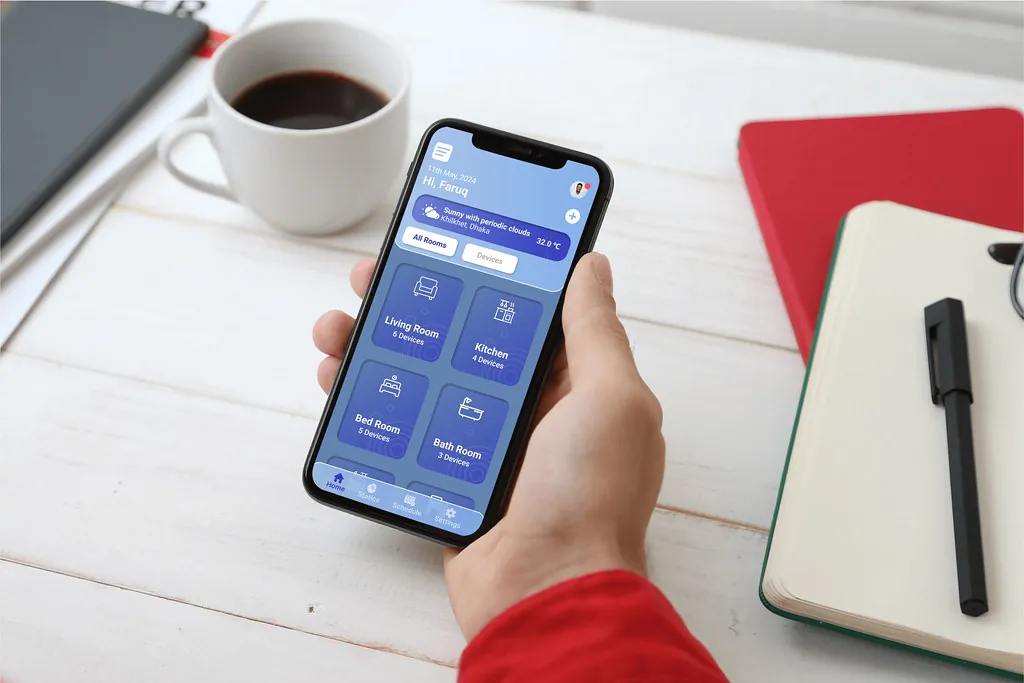
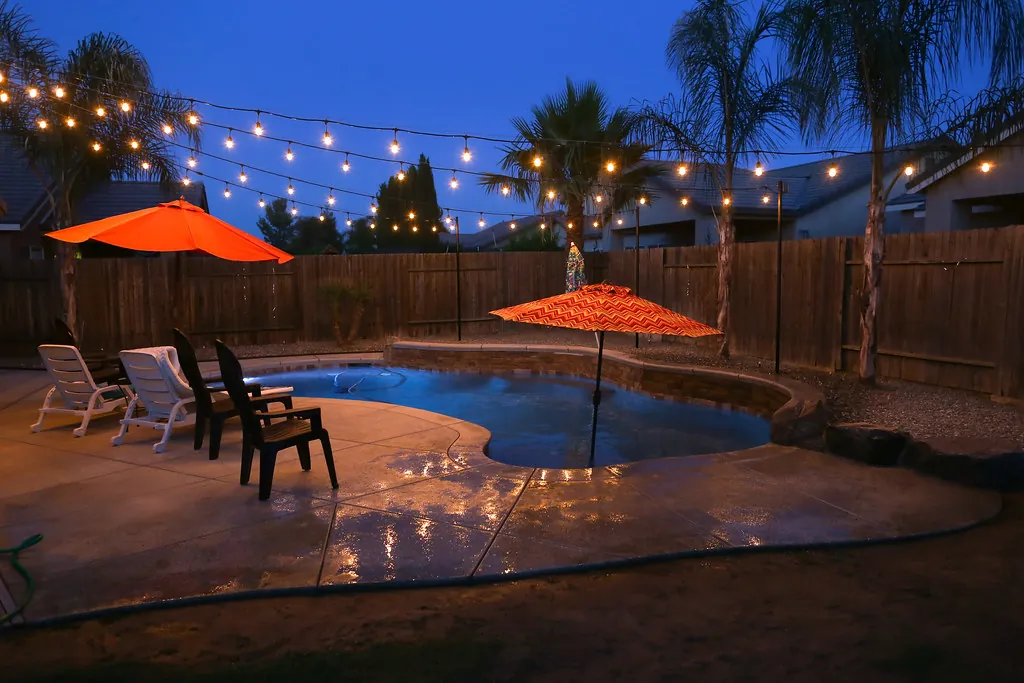
A great lighting design can be ruined by bad controls. Lights that come on at 5 p.m. in June, or stay off until 8 p.m. in December, make even the best fixtures feel like an afterthought. Smart landscape lighting controls fix that by tying your system to the actual sunset, dividing it into zones you can manage separately and putting the whole thing on your phone.
Texas Landscape Lights installs controls with every new 12V LED system and upgrades controls on existing ones. The goal is a system you set once and rarely think about again.
~3 hrstypical gap between the earliest and latest sunset in most Texas cities
2xclock changes a year that throw off basic mechanical timers
12Vlow-voltage systems that are easy to zone and dim
Why Texas sunsets make controls matter
In most Texas cities the sun sets a little after 5:20 p.m. in early December and around 8:30 p.m. in late June. That is a swing of roughly three hours across the year, plus two daylight saving time jumps. A basic plug-in timer set in winter will switch your lights on in broad daylight all summer, wasting power and annoying neighbors. Set it in summer and your yard sits dark during winter dinner parties.
Our sunset timer planner shows the exact swing for your city. For Gulf Coast homes in Sugar Land or Houston and North Texas homes in Frisco, the numbers differ slightly, but the conclusion is the same: your lights should follow the sun, not the clock.
Your options for smart landscape lighting controls
There is no single best controller. The right choice depends on how much flexibility you want, how your home network is set up and whether you already use a smart home platform.
| Control type | How it works | Best for | Limitations |
|---|
| Photocell | Light sensor turns system on at dusk | Simple systems on a budget | No set off time, fooled by shade and nearby lights |
| Photocell plus timer | On at dusk, off after a set number of hours | Basic, reliable operation | Off time drifts with the seasons |
| Astronomical timer | Calculates sunset and sunrise for your location daily | Set-and-forget scheduling | Limited remote control on basic models |
| Wi-Fi smart transformer | App-controlled zones, schedules and often dimming | Most homeowners who want phone control | Needs a good Wi-Fi signal at the transformer |
| Z-Wave or smart home integration | Ties into a hub or home automation system | Homes with existing smart platforms | More setup, depends on hub compatibility |
Zones: the foundation of control
Zoning means splitting fixtures into groups that can be switched or dimmed independently. A typical home might have four zones: facade and front trees, paths and driveway, backyard trees and beds, and patio or pool. Each zone can follow its own schedule.
For example, path lights and the front facade might run from sunset until midnight, while backyard accents turn off at 10 p.m. on weeknights. Security-minded homeowners often keep a few path and side-yard lights on until sunrise at low output.
DimmingAdjust brightness without reaiming
Dimming lets you fine-tune each zone after installation. A tree that looks perfect at 100 percent on a moonless night may be too bright when the porch light is on. Dimming to 60 or 70 percent also extends LED life and reduces energy use.
ScenesOne tap for the whole yard
Scenes store a combination of zones and brightness levels. A "dinner" scene might brighten the patio and dim the facade. An "arrival" scene might bring up the paths and driveway. "All on" is useful for security checks or when you hear a noise.
Smart homeVoice and automation
Many smart transformers and controllers work with popular voice assistants and hubs. Z-Wave and other protocols let landscape lights follow the same routines as your indoor lighting, door locks or security system.
RemoteControl from anywhere
App-based controls let you check or change your lighting while traveling, which is handy for making the house look occupied or turning lights off if a storm knocks a fixture loose.
Setting up controls that last
Smart controls are only as reliable as their installation. A few details make the difference.
Wi-Fi at the transformer
Transformers usually mount on an exterior wall, often on the far side of the house from the router. Brick and stone walls block signal. We test signal strength before choosing a location and recommend a mesh node or outdoor access point if needed. Some controllers also offer Bluetooth or a separate bridge for weak spots.
Heat and weather
Electronics inside a transformer box can bake on a west-facing wall in a Texas August. We favor shaded, ventilated locations and stainless or powder-coated enclosures rated for outdoor use. Near the coast, sealed enclosures resist corrosion from salt air.
Power and outlets
Smart transformers plug into a standard exterior GFCI outlet. If a new outlet or dedicated circuit is needed, a licensed electrician installs it. The lighting system itself stays at 12V, which keeps zoning and dimming simple and safe.
Local schedules
We choose controllers that store schedules on the device itself. If the internet drops during a storm or a power flicker, lights still follow the programmed schedule when power returns.
Weekend, holiday and vacation schedules
Smart controllers make it easy to run a different schedule on weekends, extend hours for holiday gatherings or add a temporary zone for seasonal string lights. Some homeowners keep the backyard on later on Friday and Saturday nights and shut it off at 10 p.m. during the week. Others use a vacation mode that varies the off time slightly each night so the house looks lived in. All of this runs from the same app, and none of it requires a trip outside to the transformer. That everyday convenience is the real payoff of smart landscape lighting controls.
Tip: After a long power outage, like the grid failures many Texans saw during the February 2021 freeze, check that your controller has kept its clock and location. Most modern units recover automatically, but older timers may need to be reset.
Upgrading an older system
If you have an older halogen or early LED system on a mechanical timer, upgrading controls is often the most noticeable improvement you can make for the money. In many cases we can swap the transformer for a smart model, split existing runs into zones and add dimming without replacing every fixture. If the fixtures themselves are failing, our landscape lighting repair service can retrofit them to LED at the same time, and the halogen to LED guide explains what changes.
Because LEDs draw so little power, a well-scheduled system costs very little to run. The LED savings calculator estimates the difference between your current setup and an upgraded one.
- Astronomical scheduling so lights follow the sunset all year
- At least two zones, front and back, on even modest systems
- Dimming on zones with trees and facade lighting
- App control with locally stored schedules
- Optional integration with your existing smart home platform
Want lighting that runs itself? Book a free consultation and we will recommend smart landscape lighting controls that fit your system and your routine.
Get my free lighting plan
Keep exploring